Contents
- 07 Aug 2026
Amazon Redshift Consulting Services: What nobody tells you before you migrate
Amazon Redshift has become the data warehouse standard for organizations running analytics on AWS: from columnar storage and MPP (massively parallel processing) to Redshift Serverless, Spectrum, and Redshift ML. But deploying Redshift without the right architecture - correct distribution keys, optimized sort keys, well-configured WLM queues, and governed security controls - produces a warehouse that costs more than planned and performs worse than expected. DataTerrain has migrated hundreds of billions of records to Amazon Redshift across logistics, finance, healthcare, and retail environments, including a role in building one of the world's largest retail data lakes.

- Share Post:
-

-

What is Amazon Redshift and why is it the AWS Analytics Standard?
Amazon Redshift is AWS's fully managed cloud data warehouse service. It stores data in a columnar format rather than a row-based format, which means analytical queries that aggregate or filter specific columns read far less data per query than a traditional row-oriented database. The MPP architecture distributes query execution across multiple compute nodes in parallel, enabling consistent sub-second query performance on datasets that would take minutes or hours in a traditional data warehouse. Key components include:
- RA3 nodes: Separate compute and managed storage, allowing each to scale independently. Managed storage automatically offloads cold data to Amazon S3 while keeping hot data in local SSD cache for fast access.
- Redshift Serverless: Automatically scales compute capacity based on workload demand, charges per Redshift Processing Unit (RPU) second consumed, and requires no cluster management.
- Redshift Spectrum: Extends Redshift queries to data stored in Amazon S3 without loading it into Redshift tables, enabling a lakehouse architecture where both Redshift and S3 data are queryable through a single SQL interface.
- Redshift ML: Creates, trains, and deploys machine learning models using SQL, powered by Amazon SageMaker Autopilot. Predictions are made through standard SELECT statements without requiring ML engineering expertise.
Amazon Redshift at a Glance
| Capability | AWS Service | Business Benefit | Replaces |
|---|---|---|---|
| Data Warehouse | Amazon Redshift | Petabyte-scale columnar analytics | Teradata, Oracle, Netezza |
| External Query | Redshift Spectrum | Query S3 data without loading | On-premises query engines |
| ETL Automation | AWS Glue | Serverless ingestion pipelines | Informatica, SSIS, Ab Initio |
| SQL Transformations | dbt | Version-controlled data modeling | Stored procedures, SQL scripts |
| Machine Learning | Redshift ML | ML predictions via SQL | Separate ML pipeline |
| BI and Dashboards | Amazon QuickSight | Cloud-native BI on Redshift data | OBIEE, Cognos, Crystal Reports |
Who actually needs Redshift Consulting Services?
Organizations benefit most from Redshift consulting when they face one or more of these conditions:
- Migrating from legacy data warehouses including Teradata, Oracle Exadata, Netezza, Greenplum, or SQL Server
- Running an existing Redshift environment with poor query performance, high costs, or unexplained cluster slowdowns
- Building a new analytics environment on AWS and needing an architecture designed for scale from day one
- Choosing between Redshift Serverless and Provisioned and needing workload analysis to make the right call
- Consolidating fragmented data across multiple ERP, CRM, and operational systems into a unified governed warehouse
- Requiring governed analytics for regulated industries with HIPAA, SOX, GDPR, or PCI-DSS compliance requirements
- Building toward an AI-ready data platform using Redshift ML or Amazon SageMaker on Redshift data
What do Redshift Consulting Services actually include?
Comprehensive Redshift consulting services cover seven interconnected areas:
- Architecture design: Distribution key selection, sort key design, cluster sizing or Serverless configuration, RA3 node planning, and Redshift Spectrum lakehouse design.
- Data warehouse migration: Schema conversion using the AWS Schema Conversion Tool, SQL dialect translation, ETL pipeline migration, and parallel-run validation before cutover.
- ETL pipeline development: Building ingestion pipelines using AWS Glue, dbt for transformation, and Apache Airflow (via Amazon MWAA) for orchestration and dependency management.
- Performance tuning: Query plan analysis, distribution and sort key optimization, WLM queue configuration, VACUUM and ANALYZE scheduling, and compression encoding review.
- Cost optimization: Reserved instance planning for Provisioned clusters, Serverless RPU right-sizing, Spectrum query cost reduction, and storage tiering between Redshift managed storage and S3.
- Security and governance: IAM role configuration, VPC and PrivateLink setup, KMS encryption, AWS Lake Formation column-level and row-level access control, and CloudTrail audit logging.
- BI enablement: Connecting Power BI, Amazon QuickSight, Tableau, or Looker to Redshift through governed semantic datasets with consistent metric definitions.
What does a Redshift Consulting Engagement look like step by step?
A successful Amazon Redshift consulting engagement follows a structured process that moves from environment assessment and architecture design through migration, validation, production cutover, and ongoing optimization. Each phase helps reduce migration risk, validate data accuracy, improve Redshift performance, and establish a scalable and governed analytics environment.
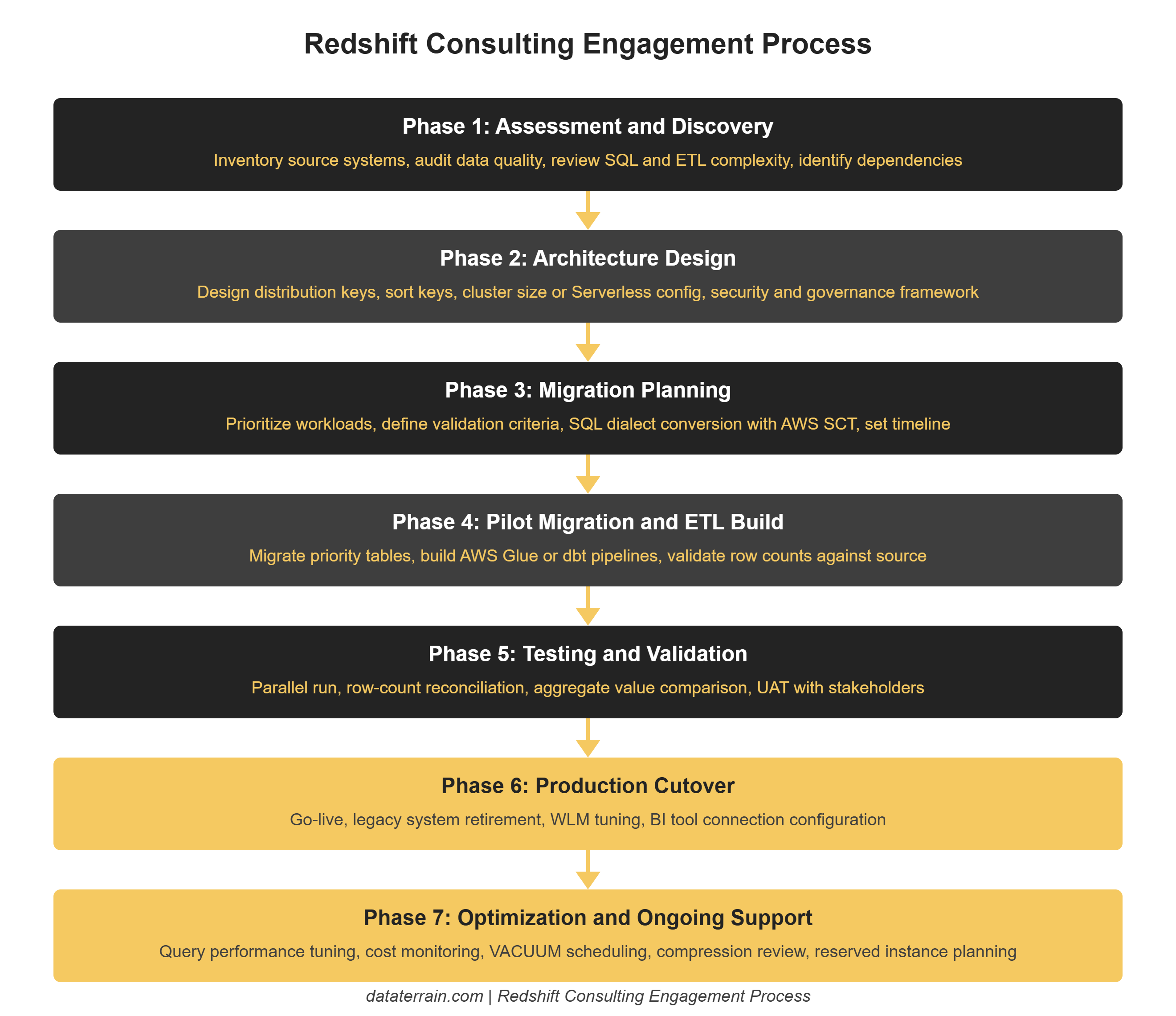
Figure 1: Redshift Consulting Engagement Process
Figure 1 illustrates the seven phases of a typical Redshift consulting engagement: assessment and discovery, architecture design, migration planning, pilot migration and ETL development, testing and validation, production cutover, and optimization and ongoing support. This phased approach helps organizations identify dependencies early, validate workloads before cutover, and optimize performance and cloud costs after migration.
Redshift Serverless or Provisioned: Which one do you actually need?
| Dimension | Redshift Serverless | Redshift Provisioned |
|---|---|---|
| Pricing model | Per RPU second consumed | Per node-hour (on-demand or reserved) |
| Scaling | Automatic | Manual resize or concurrency scaling |
| Administration | Minimal: no cluster management | Moderate: cluster sizing and maintenance |
| Best workload | Variable, unpredictable, dev/test | Predictable, high-volume, continuous |
| Cost profile | Variable: low for intermittent use | Predictable: reserved instances reduce cost |
Redshift vs Snowflake vs BigQuery: Which platform fits your strategy?
| Feature | Amazon Redshift | Snowflake | Google BigQuery |
|---|---|---|---|
| Cloud | AWS only | AWS, Azure, GCP | GCP native |
| Storage model | Managed (RA3) or serverless | Separated compute and storage | Fully serverless |
| Pricing | Node-based or per RPU second | Credit consumption | Per TB scanned or slot-based |
| AWS ecosystem fit | Native: S3, Glue, QuickSight, SageMaker | Good via connectors | Limited |
| Best for | AWS-committed organizations | Multi-cloud, data sharing | GCP-committed organizations |
What are the most common Redshift Performance problems?
- Wrong distribution key: Choosing EVEN distribution or a low-cardinality distribution key causes data skew: some nodes process far more rows than others during joins, creating a bottleneck that slows every query touching that table.
- Missing or incorrect sort key: Without a sort key aligned to the most common query filter, Redshift scans entire table segments rather than pruning based on zone maps. This directly increases I/O and query runtime.
- Stale table statistics: The query planner uses statistics to generate efficient execution plans. Tables that have grown significantly since the last ANALYZE command cause the planner to make suboptimal decisions, particularly for large joins.
- VACUUM neglect: Deleted rows in Redshift are not immediately removed: they remain as soft-deleted markers that accumulate over time. Without regular VACUUM operations, tables grow unnecessarily, sort order degrades, and query performance declines.
- Poor WLM configuration: ETL jobs, BI dashboards, and ad hoc queries competing in the same WLM queue create resource contention. A long-running ETL job can block all dashboard queries if WLM is not configured to isolate workload types.
- Small file problem: Loading thousands of small files from S3 into Redshift is significantly slower than loading fewer large files. Consolidate small files upstream before the Redshift COPY command runs.
- Inappropriate column encoding: Columns without compression encoding consume more storage and read more I/O per query. Running ANALYZE COMPRESSION and applying the recommended encodings typically reduces storage by 30 to 60 percent.
What best practices separate well-tuned Redshift Environments from Costly ones?
- Choose distribution keys based on join patterns, not ingestion patterns: the distribution key should be the column most frequently used in JOIN conditions, so matching rows are distributed to the same node to minimize data movement.
- Use compound sort keys for range-based queries and interleaved sort keys for multi-column equality filters: the choice depends on query patterns analyzed before schema design, not after data is loaded.
- Run VACUUM DELETE ONLY on high-churn tables nightly: tables with frequent deletes or updates accumulate soft-deleted rows fastest and benefit most from targeted VACUUM scheduling.
- Separate ETL and BI WLM queues: ETL loads and analytical queries have fundamentally different memory and concurrency requirements; mixing them in one queue guarantees contention during peak periods.
- Use Redshift Spectrum for cold data, not hot data: Spectrum charges per TB scanned in S3; frequently queried data is cheaper and faster to keep in Redshift managed storage.
- Monitor query plans with EXPLAIN before optimizing: the EXPLAIN command reveals exactly where a query is spending time, preventing wasted effort on optimizing the wrong component.
Is your Redshift Environment truly Secure and Governed?
- IAM roles and least-privilege access: Every Redshift cluster, Glue job, and user identity should operate with the minimum permissions required. Overly broad IAM policies are the most common security gap in self-implemented Redshift environments.
- VPC and PrivateLink: Redshift clusters should run inside a VPC with no public endpoint exposed. AWS PrivateLink provides private connectivity between Redshift and other AWS services, ensuring traffic does not traverse the public internet.
- KMS encryption: Enable AWS KMS encryption at rest for all Redshift clusters. Encryption at rest is required for HIPAA, SOX, and PCI DSS compliance and adds no meaningful overhead to query performance.
- AWS Lake Formation: Lake Formation applies column-level and row-level access controls across Redshift, S3, and Glue from a single governance plane, replacing per-service IAM policies that create governance gaps.
- CloudTrail and audit logging: Enable Redshift audit logging to S3 and AWS CloudTrail to create an immutable record of all connection attempts, user activity, and query execution. Required for SOC 2 and regulated industry compliance.
What mistakes are costing organizations money on Redshift?
| Mistake | What It Costs | The Fix |
|---|---|---|
| EVEN distribution on join tables | Massive data redistribution on every join, multiplying query runtime | Use KEY distribution on the most common join column |
| Skipping compression encoding | 30 to 60% excess storage cost and higher I/O per query | Run ANALYZE COMPRESSION and apply recommended encodings |
| Never running VACUUM | Sort order degrades, deleted rows accumulate, queries slow over time | Schedule VACUUM DELETE ONLY on high-churn tables nightly |
| Single WLM queue for all workloads | ETL jobs block dashboard queries during peak periods | Separate ETL, BI, and ad hoc queries into dedicated WLM queues |
| Overprovisioned cluster, no reserved instances | On-demand pricing for predictable workloads wastes 30 to 40% of cluster cost | Right-size clusters then commit to 1-year reserved instances |
| Querying cold data in Redshift instead of Spectrum | Paying for managed storage on data accessed once per quarter | Archive cold data to S3 and query via Redshift Spectrum |
Your Redshift Migration checklist: Cover every base before cutover
- Inventory all source tables, views, stored procedures, and ETL jobs
- Run AWS Schema Conversion Tool on source SQL; document untranslatable objects
- Design distribution keys based on join patterns from query workload analysis
- Design sort keys based on most common WHERE clause filter columns
- Apply column compression encoding using ANALYZE COMPRESSION recommendations
- Configure WLM queues: separate ETL, BI, and ad hoc query queues before go-live
- Complete pilot migration with row-count and aggregate value validation against source
- Configure IAM roles, VPC settings, and KMS encryption before any data loads
- Enable CloudTrail and Redshift audit logging to S3
- Run parallel validation: both legacy and Redshift environments live simultaneously
- Obtain UAT sign-off from business stakeholders before legacy decommission
- Schedule VACUUM and ANALYZE jobs before production cutover
- Set CloudWatch cost alarms and tag all Redshift resources by project
Which Industries are getting the most value from Redshift?
- Financial services: Regulatory reporting (Basel III, CCAR), fraud detection using Redshift ML on transaction data, and real-time risk analytics on streaming data ingested via Amazon Kinesis and loaded into Redshift.
- Healthcare: HIPAA-compliant governed warehouses consolidating clinical, claims, and operational data with Lake Formation row-level access controls and KMS encryption at rest.
- Retail: Large-scale inventory, demand forecasting, and customer analytics: DataTerrain's experience includes building one of the world's largest retail data lakes on Redshift, processing hundreds of billions of records.
- Manufacturing: Legacy on-premises DW replaced with Redshift, IoT sensor data ingested via Kinesis, and predictive maintenance models deployed through Redshift ML.
Wrapping up
- Distribution key selection is the highest-impact architectural decision: choosing EVEN distribution for a large join table multiplies the runtime of every query that touches it, and redesigning it post-launch requires a full table rebuild.
- VACUUM and ANALYZE must be scheduled, not run manually: both degrade silently over time; queries slow before anyone notices unless automated scheduling keeps them current.
- Serverless and Provisioned serve different workload profiles: choosing the wrong deployment model is the most common source of unexpected Redshift cost overruns.
- Security controls must be configured before data lands in Redshift: retrofitting IAM least-privilege, Lake Formation access policies, and VPC configuration onto a live warehouse is significantly more expensive than building them in from the architecture phase.
Final Thoughts on Amazon Redshift
Amazon Redshift delivers exceptional price-performance for AWS-committed organizations when architected correctly. The distribution key, sort key, compression encoding, and WLM decisions made during implementation determine the warehouse's cost and performance profile for years. Organizations that engage Redshift consulting expertise from the architecture phase consistently achieve faster query performance, lower cloud costs, and a governed foundation that scales without the rework that self-implemented environments typically require.
Why 400+ US Enterprises Choose DataTerrain?
DataTerrain is a specialist data engineering and analytics migration company with 17+ years of experience and 400+ US clients, including a role in building one of the world's largest retail data lakes on Amazon Redshift. For Redshift engagements, DataTerrain delivers architecture design, data warehouse migration with validated parallel-run testing, ETL pipeline development, performance tuning, and cost optimization - with automated report conversion tooling for organizations migrating legacy BI reports to Amazon QuickSight or Power BI as part of the Redshift transition.
Contact DataTerrain for a free Redshift architecture assessment, or visit our website to explore the full range of AWS and data platform services.
Explore DataTerrain's other Services
- Automated BI Reports Conversion: migrating legacy reports from OBIEE, Cognos, and Crystal Reports to Amazon QuickSight on Redshift
- ETL Migration Solutions: migrating Informatica, SSIS, and legacy ETL to AWS Glue pipelines feeding Redshift
- Data Lake Services: building S3-based data lakes with Redshift Spectrum for lakehouse architecture
- ETL to AWS Glue: automated migration of legacy ETL workloads to AWS Glue feeding Redshift
- Data Analytics Services: end-to-end cloud analytics design on AWS and Redshift
Explore the Full Redshift Consulting and AWS Analytics Library
- AWS Consulting Services: Data Lakes, ETL, and Cloud Analytics
- Optimizing AWS Glue Jobs: Performance Best Practices
- Amazon QuickSight Enterprise Analytics Guide
- Microsoft Fabric vs Snowflake: Enterprise Comparison
- Data Migration 101: A Complete Guide